
emerging markets: the value of brand

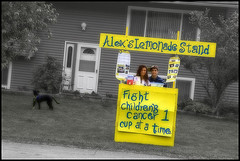
alexlemonadestand3Engineers will tell you that marketing is not necessary.   They will say that it doesn’t matter what you call it – functional products that fill a need will sell themselves.  In fact Microsoft takes that concept to a whole new level by professing smart technology – via virtue of its functionality – will sell itself (and in Microsoft’s case, despite the marketing!)

In the western world of chaotic consumerism, we know for fact that this notion of ‘build it and they will come’ does not work without a hefty marketing budget.  There is simply no way we would have had a clue what a Google or a Tivo or a Yahoo was without their marketing dollars.

But what about in an emerging market where farmers just need new drip irrigation systems or pumps?  Or perhaps access to life support medication?  Though these products may be new (just like Google was to us), it is arguable that what could be used for marketing dollars should perhaps be used to provide access, education or financial consultation for these mission critical life enhancing products.   One could argue that building a brand here seems unnecessary or worse, impudent.

But brand building does not always require the whole toolbox.  Smart companies look at their resources in order to leverage whatever they have to become a trustworthy calling card.  When done right, a brand can actually influence access, distribution, funding and much more .   A brand becomes a catchall for a promise and an expectation.  And building a brand is as much about creating a voice and establishing leadership as it is about creating the mark and materials that represent the brand in two-dimensional form.

Brand as Beacon

Debbie Millman writes in her counter to Lucas Conley’s Obsessive Branding Disorder that brands embody allegiances, affiliations and identities.  When applied to communities, clinics, hospitals, townships and small businesses in developing countries trying to attract regulatory support, distribution channels, funding access or customers, a trusted “brand” becomes the positive equivalent of the squeaky wheel.  Newcomers (government, funders, NGO’s) expeditiously seek out well-defined, efficiently run community businesses and organizations.  A well-known brand name (let’s just consider for a moment that a pretty icon isn’t necessary here) stands for something that is consistent.  Brands give businesses and organizations a leg-up. The shorthand for the “essence” or reputation that a brand creates becomes equivalent to the reputation of the village chief – only in business terms.

brand as amplifier

1298 is a subsidized ambulance service started in India and funded by The Acumen Fund.  It received a boost of attention during the terrorist attacks in Mumbai last year when its bright yellow vehicles emblazoned with the number 1298 – the number to dial if you need their service – were highly visible in all media broadcast throughout the world during the multi-day siege.  Per the founders of the company, they had very little money to promote their endeavor so they used what they had – the panels of the vehicles themselves.  By using a bright differentiating color (the founders wanted to make sure it stood out from other well-known vehicles that actually transport bodies), they not only were able to promote on the streets of the cities in which they worked but they were able to capitalize on the unexpected attention they received during the attacks.

brand as connector

Oftentimes individual businesses or health care facilities or businesses that would collectively benefit by working together can and should rally under a single umbrella “brand” name.  These organizations can attract more attention by collaborating under a single philosophy and create an influential body that will have more power than it would as individual entities.  Once again, the power of a brand name can elevate purpose and awareness with a bit of attention to the focus and crafting of a single-minded message.  Alliances become more powerful when their new partners or prospects know what to expect.  And by virtue of numbers, a single message told by many resonates and gets distributed more widely than many messages told by a few.  Brands help play the numbers game that ultimately drives awareness.

Last year the United Nations Foundation announced the Malaria Partnership project which will bring the United Methodist Church, Lutheran World Relief and the Global Fund together with the goal of raising U.S. $200 million to fight malaria.   This campaign will have far reaching effects.   Besides the twenty million constituents that the two churches in combination will reach globally to educate in the hopes of raising funds, this project will bring together clinics, hospitals and other programs in the African countries this project will benefit.

Methodists and Lutherans operating clinics and organizations who had previously operated independently will now have a single entity under which they may work together – attracting more attention, aligning with other Global Fund grant recipients and effectively creating greater collaboration along the chain of implementers at the ground level where the war against malaria is taking place.   The brand value establishes an incredibly important umbrella where the message of the sum of the efforts outweighs the individuals.   The “brand” essence created under this single-minded purpose exponentially expedites the impact of this effort.

brand as bridge of trust

As noted above The Global Fund to Fight AIDS, Tuberculosis and Malaria is a high profile NGO, set up to meet the Millenium Development Goals.  They have committed U.S. $14.9 billion dollars to date to fund grant recipients in 140 countries.    Their primary function is to finance the fight against these diseases yet they act a trusted partner to a multitude of stakeholders in the medical, science, government, and non-governmental communities. They are only 6 years old but they have achieved global recognition because of the standards and accountability connected with their business practices.  Because of their powerful brand name they – and those associated with them – receive an automatic seat at the table for life-saving business discussions.

big and small

These are just a few examples of how brand can and does influence the effectiveness of business.   Social entrepreneurships, non-profits and NGO’s operating in developing countries would do well to craft a brand voice from the get-go and look for ways to optimize the single-minded purpose of their presence and business model.  In this vein, its easy to see why the practice of branding makes sense.

We, in the Western world, live in a heightened state of what has been argued as over-branding.  Yet we select our resources based on the knowledge mostly projected or acquired from branded products and experiences (insurance, soup, fertilizer, you name it).  Its easy to see how the importance of brand can translate to the effecitveness of new ventures in emerging markets.

electrical innovation

Changing consumer behavior can be a slow painful process.  Not only does it require educational efforts but often widespread systemic conformity is required. However innovation has radically altered some of our most fundamental behaviors.   Globally, we now access cash from a machine and we carry and use mobile phones for a significant percentage of our calling.  Its this type of basic change that will be required to have significant impact on socially and environmentally responsible consumption habits.

Shai Agassi has just such aspirations.  The electic car has been the talk of the town at the Detroit auto show this year but Shai’s concept is the most intriguing and well thought out.  In this week’s Newsweek, Fareed Zakaria talks to Shai about his idea for a Better Place in “Switched-On Highways”.    Shai does exactly what is necessary for radical innovation – he flips the approach.  Instead of framing the problem as “how to build a better car”, he frames it as “how to run a country without oil”.  He takes an ambitious approach that looks at both the infrastructure, the model of ownership and of course, the power source.

Return to electricity

Even with oil returning to under $50 a barrel, Shai’s new model is betting on the electric car to remove our dependency and make the switch to clean electricity.  With the required infrastructure in place, the cost ends up somewhere between six and eight cents per mile which is motivation in and of itself, even if oil got down to $25 a barrel.

The razor model

Taking a page from the razor, printer and video game model, he has also separated the car from its core function – the electric battery.   A truly radical idea when it comes to car ownership but one that makes a lot of sense.   The basis for this is the need to re-charge batteries after they drain all of their power.  This drops the price of the car and its operation even further and makes acquisition a lot more appealing.

Leveraging existing behavior

But what’s important about this model is that it leverages our existing and well-established behavior of stopping at the “gas” station.  For long haul driving – or even for convenience during a normal day of driving – it doesn’t make sense to have to stop and re-charge an electric battery when it’s run out of its juice.  So, Shai proposes switching stations where you just pick up a fully charged battery.

There are flaws in this model but radical innovation generally doesn’t happen perfectly the first time.  What is exciting about the Better Place concept is that it addresses consumer behavior from the get-go.   Plugging an electric car into your own garage sounds exciting but offering a car at a reduced price with the “benefit” of a switching station somehow puts the consumer at ease simply by offering them the comfort of a long-held tradition. Eventually we’ll get to fully plugged in at-home cars (cuz after all we all hate to stop at the gas station), but first Shai has to get them to buy the cars.

And the really exciting thing….California is already set to begin adoption of a Better Place this year!

image credit: Better Place logo by techpulse360 on Creative Commons

evolving “green”

Landor – a leading brand strategy firm – published their 2009 trends forecast last week and I was very excited to see this language as they commented on the softening of the “green” trend: “Brands will need to integrate their commitment to sustainability into a larger message of efficiency, effectiveness, and value.”   I was excited because it means that perhaps we’re  starting to actually use the rationale  behind why these products and services should be green and get beyond the moniker of “green” itself (which just feels totally stagnating and short-lived, if not totally off-putting to the greater society as an outcome of the hippy movement).

Landor notes that the intensity of this trend is softening.  I think they’re right and wrong.   Symptomatic marketing relative to eco and green might be less appetizing given the concerns of the world right now (in other words adios B*S*#), but consumer motivations are actually becoming even more grounded and inclined to respond to products and services that are community minded, built simply and incorporate honest claims.  This isn’t exclusively green or sustainable but can be traced to the same roots.  In fact, smart marketers should look to the motivators behind the interest in “green” (and social responsibility and philanthro-capitalism and CSR and cause marketing) and work to connect with consumers leveraging any trace of these values found within their own brands – not simply give the prescribed nod to “green” and “sustainable” but be a little more clever in connecting with what underlies these trends.

best storytelling in a 2 minute video.

If only there were an Oscars category to represent the communication efforts of social change.    This video might win hands-down this year.  Not only is it simple and engaging but the audience will not forget The Girl Effect‘s logo.   The high impact of this video is the culmination of extraordinary design, fantastic editing, a beautiful score  and a well-crafted screenplay.  And all underscore the impact of the project’s identity.  I guarantee you will remember it.   Now, as with all things amazing, there are tons of others who have deconstructed the bejeezus out of it.  Two of my favorites were Made to Stick’s and Nathaniel Whittemore’s, though I love that google.org’s blog picked it up too.  I look forward to more amazing work by ad agencies “for benefit”.

beyond BetterWorld bingo

A term was coined in the early 90’s to describe the practice of using predictable trendy references to common business practices.  Called “buzzword bingo” the game was a reaction to the low value the individual words carry when generously used in speeches.  A similar thing is happening now.  A second cousin to “green washing”, businesses “in the business of doing good” are setting up shop left and right with names such as Global Giving, Give Something Back, Global Exchange, World of Good, BetterWorld Telecom, BetterWorld Books, One World Health, etc.  Are these businesses sacrificial lambs to the movement?  Socially responsible consumerism is in its very early stages of popularity.  Brands like Kiva and (RED) are still largely (despite some heavy weight marketing efforts) unknown and yet consumers seem to be open, even searching for opportunities to do more with their money.     To capitalize on this interest and to create “points of difference” within familiar categories, companies are using mindsets as icons to navigate the waters.  In a largely new frontier this works for the time being.  At least until that time we socially conscience people are working for – when the Nikes and Gaps of the world catch up to deliver a badge-worthy experience that’s as socially responsible as the next smaller company.    This is not to say that bgreen (apparel), greenerprinter, Earthlust or Eco Home Improvement are bad names, have bad products or are in any way less valuable to this movement of more responsible living.  But by choosing a common mindset for “differentiation”, they need to work harder to back it up with a unique brand experience.  One that feels compelling and which gives an opportunity to build a relationship on.    Patagonia and Timberland each carry a unique brand cache despite similar views on products created with earth-friendly practices in mind.   They have each created a different essence, an experience that delivers through the product.  This is how they built and kept a loyal audience within the apparel and shoe category.   Global Giving and World of Good are in their teen years relative to these mature brands, however it is in these years that they need to carefully develop and leverage their assets to create a brand that has a life beyond what is very certainly the better-business-buzzwords of today.

carbon consumerism

Innovation is born of necessity.  And strangely the carbon cap and trade system just might fit into that category.  History has proven that we need crisis to catalyze change.  And then it requires everyone, and I mean everyone, to understand and participate in the solution.  So while the cap and trade system is targeted at businesses, consumers will play a huge reinforcement role.  Enter ideas like the Carbon Quotient Project.  The CQ is an extension of similar concepts launched in Thailand and Japan that essentially strive to create a standard unit for product labels.  Much like the nutritional fact labels that adhere to all packaged food products, the CQ could give us GHG’s emitted, reduced or otherwise advise on a stand unit of measure for the carbon footprint of each product.  We, the consumer, then have the ability to offset our bag of potato chips or bottle of beer by riding our bike to work or simply not purchasing.  There are actually a million different behaviors that this could launch but the bottom line is that we would start to become educated relative to a standard unit (so the theory goes), hold businesses accountable and gradually start to bring about global responsibility and accountability for how businesses are impacting the deteriorating environment around us.   It has been said before but change is incremental.

short-termism

and the need for sustainable capitalism.  what Al and David said.   amen.

innovation gone awry

At first I loved this idea:  a clock-radio that racks up the cash contribution to charity every time you hit the snooze alarm!  How clever I thought.  This takes real innovation in terms of examing our every day behaviors for the purpose of mining it for something good. But then I read, and actually re-read, the copy.  You’re supposed to set it to the charity that you hate so that the double-negative of “wasting” your money while wasting away your productive hours angers you into getting up…..huh?  Why all the negativity?  Is that a way to start the day?  Why not set it to your favorite charity and enjoy the fact that those needed extra minutes of sleep are not only helping your body recover but helping someone else too?

lessons for brands of change

Marketers have been watching the emergence of the Obama brand since nearly its inception. At that time, I don’t think anyone even dreamed of the impact this carefully crafted icon would create.  Quite literally, this brand power got us to this, our 44th President-elect.

While not every brand driving messages of social change will have the benefit of rising to such fame in two years compliments of $65 million in funding and daily prime news coverage, Obama’s campaign does clearly exemplify the fundamentals of building a strong brand.

1. Be different – stand out, stand for what you believe in.

2. Be authentic – never waiver from your purpose.

3. Be optimistic – people want to love something that makes them feel good.

4. Be consistent – and do it with passion.

5. Be individualistic – speak to your consumers 1:1.  Every relationship matters.

For more on Obama’s Lessons for Marketing from Henry Lambert on PSFK.com.

leadership

OK, its the “day after”.  And the meaning of yesterday’s elections have been and will continue to be reflected upon over and over.  However as we think about social change in the world.  Its important to consider how that change will happen and the role of leadership.

Its been quite some time since we’ve seen examples of real leadership.  Mostly we’ve seen ‘the guys at the top’ looking for post-fraud scapegoats or excusing themselves out of straight-up bad or arrogant decision-making.    These were never individuals fighting for change, they were looking for power and/or money.  However, in the post-election glow that most of us are feeling, we are finding profound hope in a single individual who demonstrates the true qualities of a leader.   Integrity.  Character. Humility.  Calm assurance.  The ability to listen and respond with sound, articulate reasoning.  Stamina.  Focus.  A champion for his followers.  A passion for truth.  This is where change starts and this is why change becomes inevitable when true leadership exists.

With leadership, not only do we expect follow-through but we expect excellence.  Leaders build excellence, they don’t command it.   Barack Obama comes to us with cross-cultural beginnings and a foundation in community building.  He knows that change is not possible without the commitment of every individual he leads, which means he knows how to communicate and engage.   These are qualities we can all learn from in our own efforts to impact change.    Real leadership requires discipline and an unprecedented commitment to see things through.

We can all be inspired by the story of Barack Obama and the impact he will have on our lives – from what is personally possible to the real impact he will have on the change we all believe is necessary.